
Stone fruit cobbler with lavender and black pepper
From Marie Frank's debut baking book More Than Sweet <3

hey hi hello!!
Welcome back to bake chats!! Today we are joined by Marie Frank author of the “More than Sweet” newsletter and now the book of the same name- which came out today!!

I’ve been a fan of Marie’s for some time now. The care and thoughtfulness she puts into every flavor combination she puts forth is incredible and evident in the her new book. A lot of our philosophies on food and flavor are aligned. So I deeply appreciate the written perspective she shares about the differences in flavor and taste, and how the aim is to guide you into being able to discern your own tastes and preferences to make you a more intuitive and thoughtful baker.
I’ll keep it short n’ (more than) sweet up here, to give ya time to enjoy the interview we have with Marie today and the recipe for stone fruit cobbler with lavender and black pepper. Which, I did make this week, with a few riffs and tweaks of my own, because well that’s the whole point!! But, the bones of the recipe remained the same and the results were *chef’s kiss*
Be sure to order a copy of More than Sweet from your favorite book store to enjoy more of Marie’s recipes :)
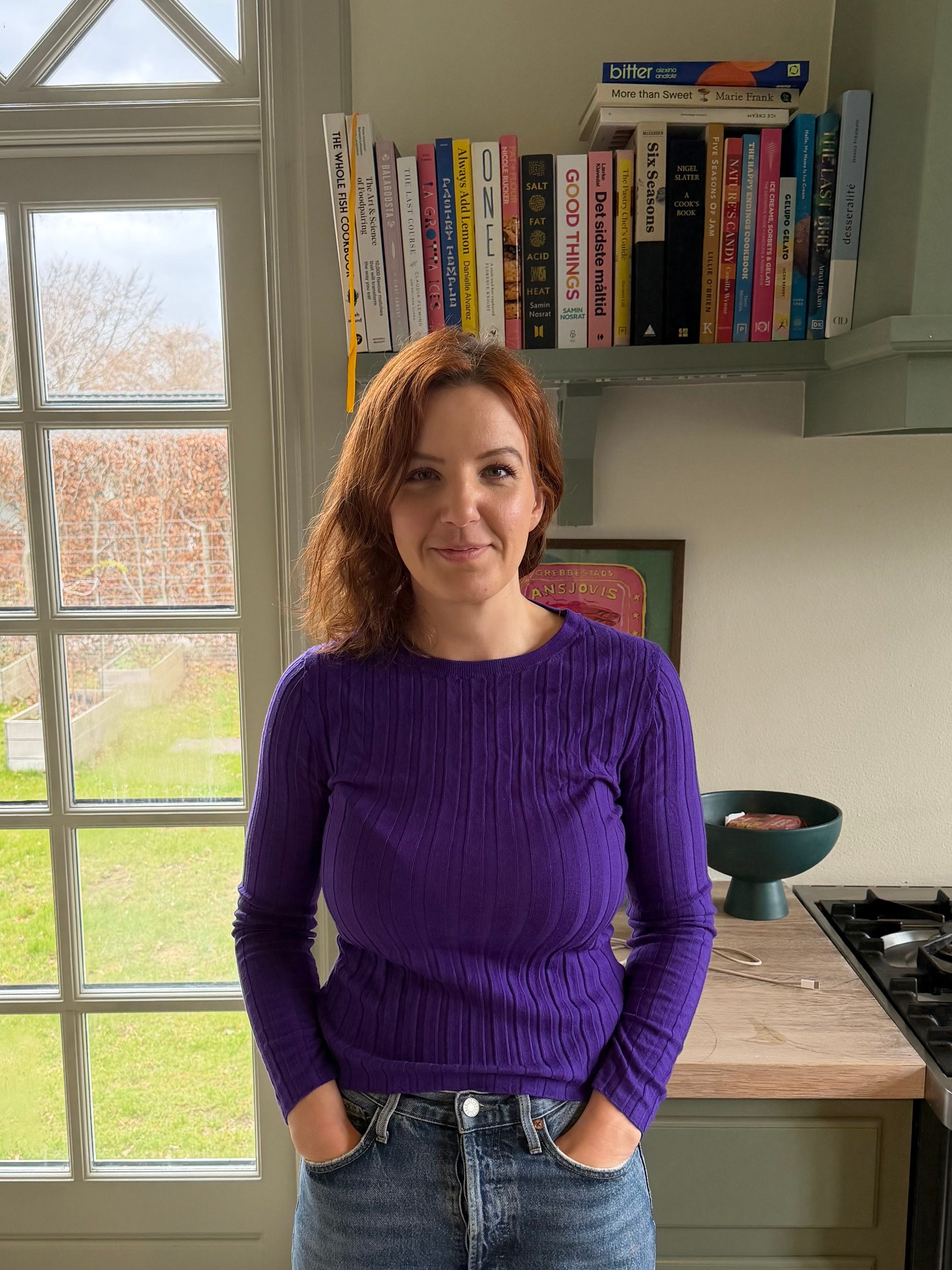
I loved how in the intro to the book you said you “remember your life in flavors”. Do you feel like your desserts now are a way of documenting your life? What flavor(s) would define the current season of your life?
I love this question! Yes, I do. I remember in flavor. My first date with my husband 19 years ago? I can tell you in detail what we ate, but not where we went for a walk after dinner. So many memories are in food/flavors. The current season of my life would be rhubarb. I think rhubarb is technically a vegetable? I love that it can be used in both sweet and savory dishes, that at its best it hits that beautiful spot between sweet and tart. It can be glammed up with lots of aromatics like spices and herbs or just kept as it is and be delicious either way.
How does your personal philosophy or outlook on life reflect in the way you approach food and baking?
I am very affected by my mom, who was a language teacher to immigrants, and especially being around her students growing up. Not just the flavours in the food, but the generosity through the cooking. Food is political, it is living history and culture passed - often through women - down the generations. And being shown time and again that the less you have, the more you give. At heart I am an eclectic globalist. I love finding inspiration in food from all over the world and blending them into the way I bake.
Looking back on your time in the kitchen, what’s the most important lesson you’ve learned from others?
To be generous with knowledge. I am incredibly grateful to have been taken under the wing of some of the most amazing pastry chefs when I first started baking. Women who shared the little tricks of the trade, their techniques, even their recipes when I first started out and made lots of mistakes. Oh and ALWAYS taste and season your food. That goes for desserts, too.
Baking often involves trial and error. Can you share an instance where a mistake led to a valuable lesson?
I spent 6 months trying to learn how to bake canelés. I failed again and again and again. And I didn’t know why they worked in one oven and not in another until I tested the temperature in both and found they ran at completely different degrees even set on the same setting. Know your oven!
Your book encourages people to adapt recipes and “make them their own”. How do you personally know when a dessert is finished vs. still evolving?
I don’t think a dessert is ever actually finished. Not flavour wise. I have returned to recipes in the book and continue to adapt them. Not the core recipe - the ratios - but the flavor profiles I continue to adapt.
The book emphasizes that taste is subjective and recipes are just “suggested flavor pairings”. How do you want home bakers to trust their own palate more?
To begin with, I hope that if I have used flavor pairings that don’t resonate with them for some reason, “I don’t like that herb or this fruit isn’t in season”, they will swap out with one they do love and have access to. I hope they will use the other recipes in the book as a guideline to swap out the aromatics in recipe A for the aromatics in recipe H until it feels more intuitive to play with herbs, spices and other aromatics like we more instinctually do in savory cooking.
If someone cooks through your book and walks away with one shift in how they think about dessert- or food in general, what do you hope that is?
Always seasoning to YOUR taste. Just because I like a certain level of salt or acidity, doesn’t make that right for your palette.
Right now, outside of baking, what’s inspiring you the most creatively?
Mixology - I think bartenders are some of the most inspiring people when it comes to flavor and indie perfumers. I love looking at the note descriptions of fragrances and often find inspiration for desserts there, too.
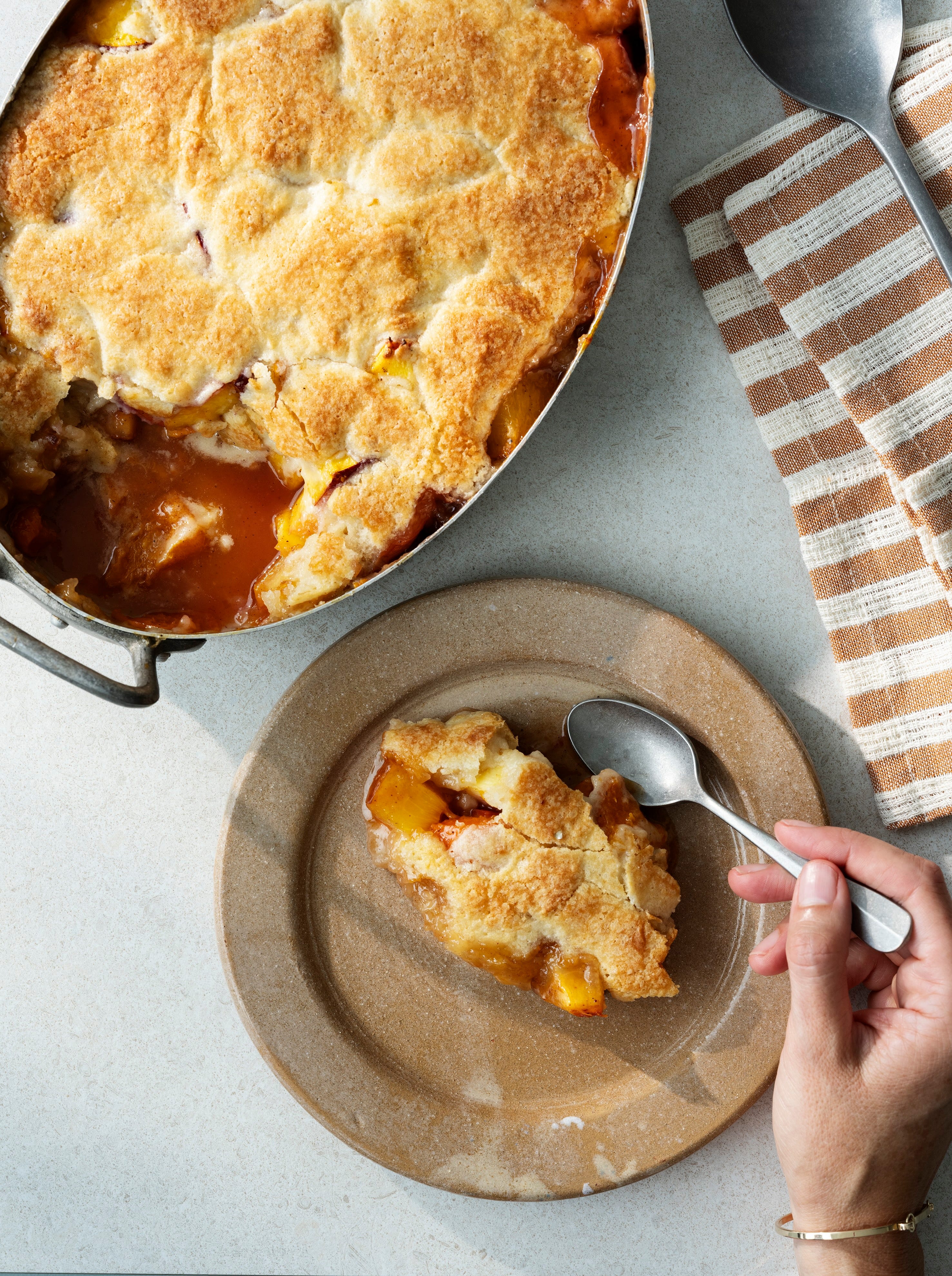
STONE FRUIT COBBLER WITH LAVENDER & BLACK PEPPER Serves 8–10
Excerpted with permission from More Than Sweet: Desserts with Flavor by Marie Frank, published by Hardie Grant North America, April 2026
Known in my house as the lazy person’s (a.k.a. me) pie, a fruit cobbler is one of the best and easiest desserts to showcase seasonal fruit. It is probably one of the most versatile recipes in my arsenal, baked individually for dinner parties and served with a scoop of ice cream or pitcher of cold cream on the side, or in large pans for sharing family-style.
If you see the word lavender and immediately think of your grandmother’s potpourri, fear not—the sweet stone fruit, floral lavender, woody cinnamon, and sharp black peppercorns are a heady combination that taste at the same time new and familiar. You can also use the flavor chart for inspiration to make your own perfect cobblers with whatever is in season.
INGREDIENTS
FILLING
2 pounds / 900 g stone fruit (such as nectarines, apricots, cherries, or plums), pitted and sliced ¼ inch / ½ cm thick
½ cup / 100 g granulated sugar
Zest and juice of ½ orange
1 tablespoon cornstarch
1 teaspoon ground lavender
1 teaspoon ground cinnamon
½ teaspoon freshly cracked black pepper
½ teaspoon salt
TOPPING
1 cup / 125 g all-purpose flour
¾ cup plus 2 tablespoons / 175 g granulated sugar
1 teaspoon baking powder
½ teaspoon salt
¼ teaspoon ground cloves
¼ cup / 55 g cold unsalted butter, cut into ½-inch / 1.3 cm pieces
½ cup / 120 ml cold buttermilk
2 tablespoons heavy cream
2 teaspoons demerara sugar
Crème anglaise or ice cream (such as lemon verbena; see page 75), for serving
PREPARATION:
Make the filling
Place the fruit in a large bowl and toss with the granulated sugar, orange juice and zest, cornstarch, lavender, cinnamon, black pepper, and salt. Set aside to macerate for 10–15 minutes.
Make the topping
Mix the flour, granulated sugar, baking powder, salt, and cloves in a medium bowl, then cut in the butter with a pastry cutter until the mixture resembles breadcrumbs. Add the buttermilk and mix until everything is just combined.
Assemble the cobbler
Preheat the oven to 375°F / 190°C.
Arrange the fruit in a 9-inch / 23 cm square baking dish and drop 2-inch/5 cm round “biscuits” on top of the fruit, then brush the biscuits with heavy cream and sprinkle with demerara sugar.
Bake until the topping is golden brown and the fruit juices bubble around the edges, 40–50 minutes. Remove the dish from the oven and let cool on a wire rack for at least 30 minutes before serving.
Serve warm or at room temperature with crème anglaise or ice cream.

I just got her book in the mail! Amazing ❤️
Can’t wait to cobble this up! Sounds delicious :)